



Eat local foods and seasonal foods – a piece of advice many of us receive when we set out on a journey towards reducing our carbon footprint and overall impact on the environment. Why exactly is that?
In this article, let us introduce you to the basics of becoming a locavore, why it’s a great choice to make for the environment, as well as other considerations to take into account when it comes to your food and its carbon footprint.
Benefits of eating seasonal and local foods
Locavores enjoy better food quality
If you choose food that’s grown seasonally and locally, you’ll likely be eating foods that are of much higher quality. This is because they’re harvested when they’re actually ripe. Imported foods, on the other hand, are often harvested long before they ripen and the ripening happens while the foods are stacked in crates during transport. As they don’t have access to nutrients while that happens, the taste is usually negatively affected.
Additionally, the natural sugars in the food start converting to starch as soon as they’re cut off from the plant. Therefore, foods that are transported over vast distances will taste much starchier than freshly harvested local foods.
Reducing your carbon footprint
If food needs to be transported over long distances to get on your plate, this increases your carbon footprint. Local, seasonal foods, on the other hand, don’t need to travel for thousands of miles, consuming fossil fuels, to get to your local farmers’ market.
Additionally, if you choose food produced in season, you’re preventing the use of greenhouses and technologies which consume more energy and other resources, increasing your carbon footprint.
Helping with waste reduction
To be transported over such vast distances, foods that are not grown locally usually require a lot of packaging to protect them from damage. Usually, this packaging is plastic – and, as we covered in an earlier article, only ~9% of all plastic ever made is recycled.
The problem with so much packaging isn’t just the waste it produces once it’s no longer needed, it also takes a lot of resources to produce the packaging – which is another factor adding to the carbon footprint.
How to become a locavore
Having learned about the wonderful benefits of choosing locally-grown seasonal foods, how does one go about becoming a locavore and supporting farmers in their area?
-
Find out what’s in season in your area
First and foremost, learn about which foods are seasonal in your local area at specific times of the year. Since this is likely to vary by regions substantially, it’s very important that you look for information as specific to where you live as possible – the national level may not be enough unless you live in a small country. If you live in the US, the Seasonal Food Guide is a good tool for figuring out what’s currently in season in your state.
Once you know which foods to opt for in different seasons, create a list of foods to cook in these seasons, which will get you excited to use the specific ingredients.
It’s also a good idea to prepare for the seasons ahead of time, to be sure you can make most out of eating seasonally. If you’re able to buy a lot of locally-grown berries in the summer, freeze them to use them during the winter so that you don’t need to buy imported foods then. Learn how to store these foods properly to minimise food waste when preparing for the winter.
-
Visit the Farmer’s market
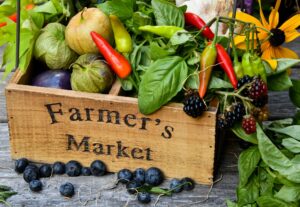
You may be able to buy local, seasonal foods at the supermarket. However, the best option when it comes to supporting local farmers is the Farmer’s market. Here, you’ll likely find farmers that are most local, use the least packaging, and would be happy to chat with you about the practices on their farms, so that you can ensure the food you’re buying is truly good for the planet.
-
Grow your own
If all else fails, or perhaps if you’ve just been dabbling in gardening a little, why not try growing your own foods? This doesn’t have to mean you produce all the food you’ll be eating – and you could start with something as simple as a few herbs on your windowsill.
Growing your own food also gives you a new appreciation for what it takes to produce what we eat on an everyday basis!